
/blog/en-inbox-vs-spam-global-email-truth · plans: /standalone-deploy/plans
The sending truth · Dedicated lane · Your CRM · Perpetual license Standalone plans: www.bigsocialboss.com/standalone-deploy/plans
✈️ Telegram: Kxg245 WeChat: BigSocialBoss123 Ask about the email marketing platform → Open Telegram
The question every inquiry starts with
People asking about an enterprise email marketing platform almost always hit the same line:
“Do your emails land in the inbox, or in spam?”
What they usually mean: only the inbox counts. Spam folder = wasted money, broken product, deal over.
The fixation is understandable. The market has sold “inbox rate” for years, and some vendors still chant “we guarantee inbox.” Anyone who has actually sent globally knows that sentence does not survive contact with Gmail, Outlook, or Yahoo.
Truth 1: Every platform has a spam-folder probability
Mailbox providers run their own filters. They look at:
- Reputation of the sending IP and domain
- SPF / DKIM / DMARC
- Complaints, bounces, trap hits
- Whether this recipient has engaged with you before
- Content, links, and sending cadence
No reputable ESP and no self-hosted stack can contract “100% inbox.” Mailchimp, Brevo, SendGrid, Amazon SES, homemade Postfix—same physics: probability, not a switch.
If someone guarantees inbox placement, treat it as a pitch, not a technical fact. The mailbox vendor—not your software supplier—decides the folder.
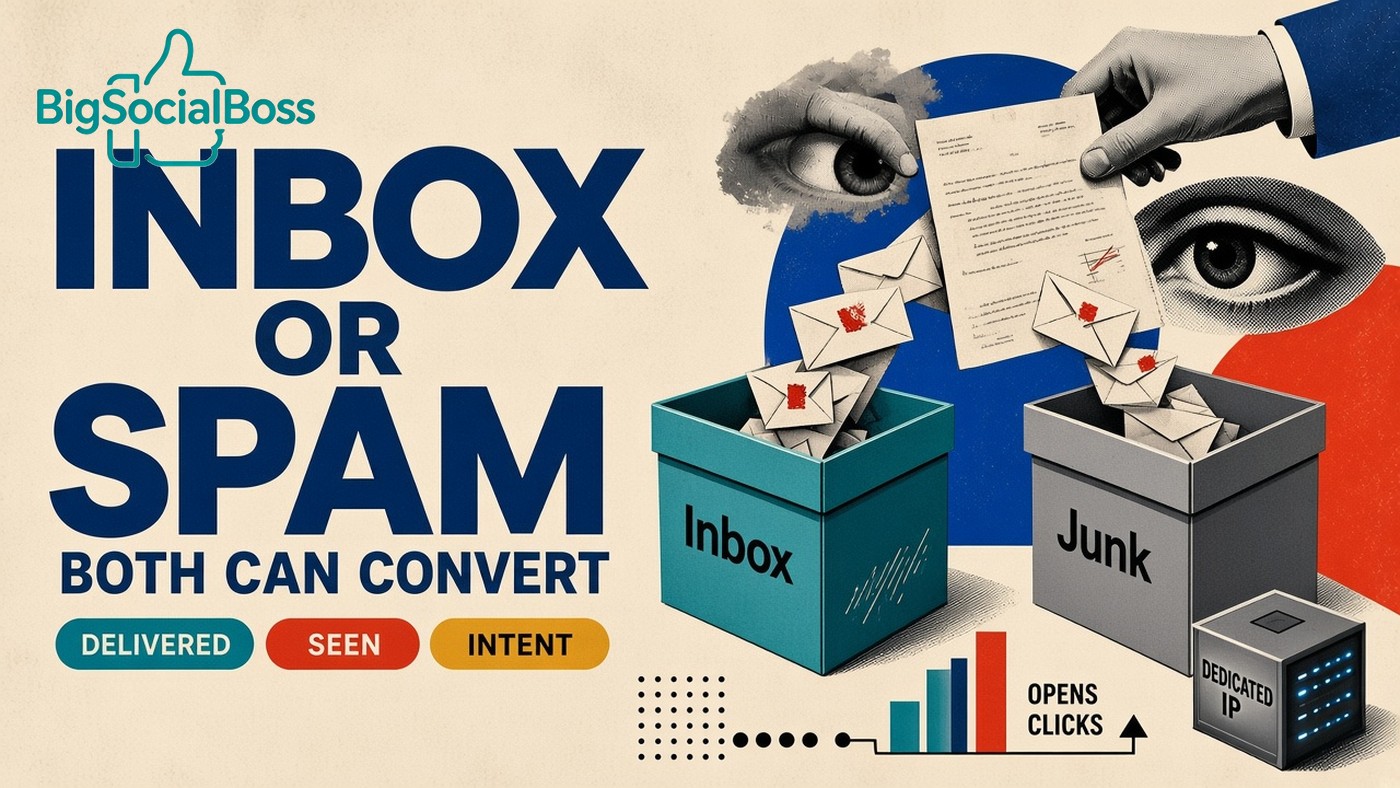
Truth 2: Spam is not the same as “they never got it”
Many buyers map folders like this:
| Folder | What they think it means | |--------|--------------------------| | Inbox | Valid, successful, money well spent | | Junk / spam | Failed, useless, the system does not work |
The real path is:
- The receiving system accepts the message (not rejected, not black-holed)
- Then it classifies: inbox, promotions, junk, quarantine
Landing in spam usually still means the message arrived in that person’s mailbox. Plenty of buyers, owners, and IT admins check junk. Some open more than once. If the content is interesting and there is intent to purchase or subscribe, they reply, add a contact, or order—the folder name does not automatically zero out the business.
What is actually useless: hard rejects, dead addresses, mail that never left your queue. That is non-delivery. Spam is “delivered, then filed more strictly.”
Truth 3: Effectiveness is “seen + intent,” not the folder label
The bar we keep repeating to inquirers:
- The message was sent
- The other side can receive it
- Whether inbox or junk, they can see the content
- They care enough to buy, inquire, or subscribe
Opens, clicks, repeat reads, replies—the platform already records these. Use the numbers. Do not let “must be inbox” be the only KPI.
One message read carefully from junk that produces an inquiry beats ten untouched “perfect inbox” rows that nobody opened. Folders are the provider’s labels. Deals happen where attention is.
We still work the inbox ratio: dedicated IP, domain authentication, list hygiene, unsubscribes and complaints. That is operations. It is not a license to promise “never junk.”
Dedicated sending usually beats shared SaaS—better odds, not magic
Typical SaaS tools put many customers on a shared IP. A dirty neighbor hurts you. A dedicated sending lane (your machine, your IP, your domain auth) keeps reputation in your hands. Overall delivery is usually better than a shared SaaS pool.
Read “better” all the way through:
- Better accept rates, fewer surprise reputation hits, a stabler long game
- Some mail will still be filed as junk or promotions
- A dirty list, high complaints, no warmup, or purchased addresses will still burn a dedicated lane
So the buying question is: is the lane dedicated, is the data yours, can you see stats—not “can you guarantee inbox?”
What you take home is a usable enterprise base, not a rented login
You are not only buying “send one campaign.” You are taking an email marketing platform you can run:
- Dedicated sending (typically stronger than shared SaaS)
- Your own CRM / contact database on your server—not a list you rent and lose
- Campaigns, templates, send monitors, open / click / failure stats
- Install on your server and domain
The positioning is honest: a complete, basic enterprise email stack—not a seven-figure custom build, and not a seat on someone else’s cloud UI.
Four perpetual licenses (daily volume; confirm on the plans page):
| Daily cap | Perpetual | |-----------|-----------| | 3,000 | $39 | | 30,000 | $99 | | 50,000 | $219 | | 100,000 | $299 |
You provide the server and the domain. License is bought out. Lists and history stay with you.
Plans: standalone deploy
Better questions than “will it hit the inbox?”
Swap the obsession for:
- Can you guarantee 100% inbox? — The only honest answer is no. Be more careful with anyone who says yes.
- Dedicated IP / lane, or a shared pool?
- Is the contact database mine, or locked in the vendor’s cloud?
- Can I see and export delivery, opens, clicks, failures?
- Do I control authentication, unsubscribe, and complaint handling?
Drop the folder superstition and it gets easier to decide whether this platform belongs in your company.
Bottom line: Global sending is probability, not mythology. Spam is not a synonym for “worthless.” Received, seen, interesting, intent—that is the point, and the stats show it. Dedicated lanes give you better odds than SaaS, plus your own CRM, at four perpetual prices. Then write to people who actually buy.
FAQ
Can any sending platform guarantee the inbox?
No. Gmail and Outlook classify mail themselves. Mailchimp, SES, and self-hosted stacks are all probability.
Does the spam folder mean the message was not delivered?
Usually not. Rejects and dead addresses are non-delivery. Spam still often sits in the recipient’s mailbox.
What should buyers measure instead?
Delivery, opens, clicks, replies, and purchase or subscribe intent—in the platform stats.
How is the BigSocialBoss email stack sold?
Dedicated sending plus your CRM, on your server and domain. Perpetual: $39 / $99 / $219 / $299 (3,000 / 30,000 / 50,000 / 100,000 per day).
Related: Why mail goes to spam · Self-hosted dedicated IP and private DB · Dedicated vs shared IP
✈️ Telegram: Kxg245 WeChat: BigSocialBoss123 Ask about install → Open Telegram